How LED Light Actually Triggers Your Skin to Make More Collagen
Share
You've heard LED face masks "boost collagen production," but what does that actually mean? How can shining colored lights on your face tell your cells to make more protein?
Let's break down the fascinating science behind LED light therapy and collagen synthesis.
What Collagen Does (And Why It Matters)
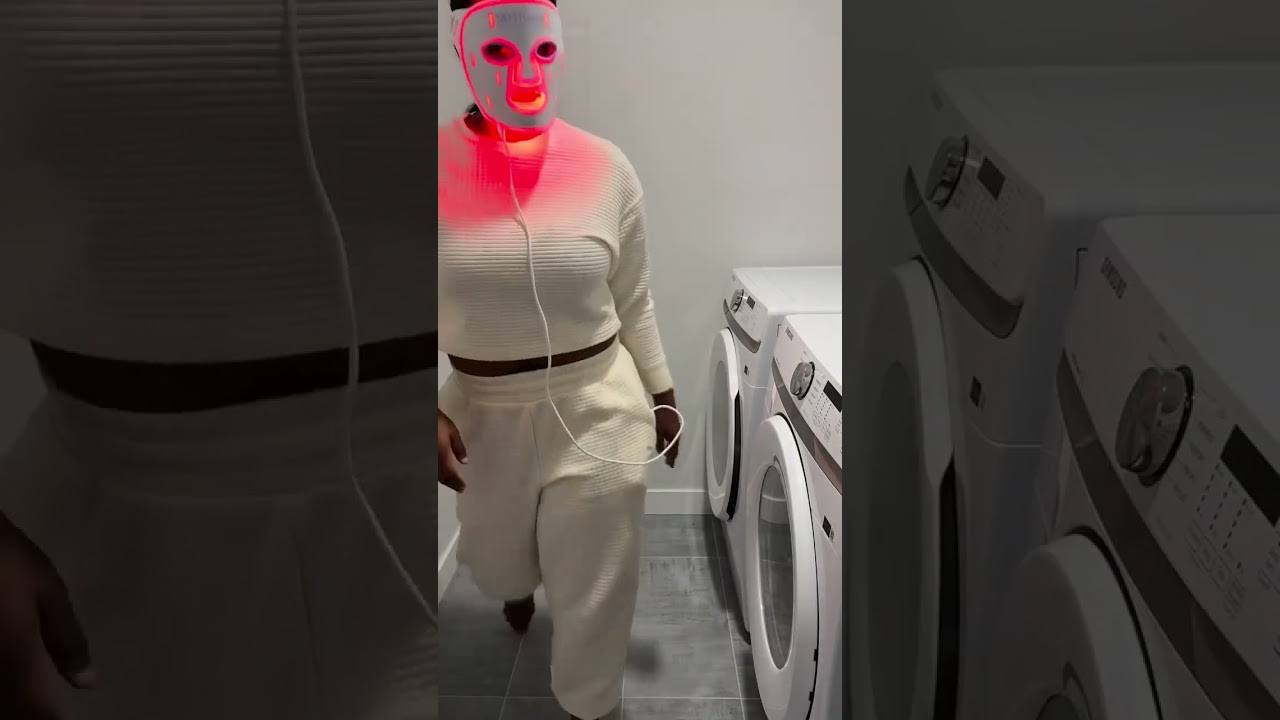
Watch: LED Face Mask Results
Collagen is the structural protein that keeps skin firm, plump, and smooth. Think of it as the scaffolding that supports your skin from within. According to dermatology research, collagen provides structural support—when you have plenty of it, skin looks youthful. When collagen breaks down with age, wrinkles form.
Your body makes less collagen as you age. By your 30s, production slows. By your 40s and 50s, the decline becomes visible in the form of fine lines, wrinkles, and loss of firmness.
LED therapy offers a way to stimulate collagen production without invasive procedures.
The Cellular Mechanism: How Red Light Works
Here's what actually happens when red LED light (630-700nm wavelength) hits your skin:
Step 1: Light Penetrates to the Dermis
Red light penetrates deeper than visible blue light—reaching 8-10mm into skin, deep enough to access the dermis where collagen-producing cells (fibroblasts) live.
Step 2: Mitochondria Absorb Light Energy
Inside your skin cells are mitochondria—the "powerhouses" that produce cellular energy (ATP). According to research on photobiomodulation, red and near-infrared light penetrates deeply and activates fibroblast growth factors in skin cells, generating collagen and elastin.
Specifically, mitochondrial chromophores (particularly cytochrome c oxidase) absorb red light photons. This absorption triggers a cascade of cellular responses.
Step 3: ATP Production Increases
The absorbed light energy boosts ATP (adenosine triphosphate) production—your cells' energy currency. More ATP = more cellular activity and function.
Step 4: Fibroblasts Activate
With increased cellular energy, fibroblasts (the cells responsible for producing collagen) become more active. Research published in the Journal of the American Academy of Dermatology found that treating human skin with low-level red and infrared LED lights increased expression of collagen types Col1A1 and Col1A3 within one week.
Step 5: Gene Expression Changes
LED therapy doesn't just speed up existing processes—it actually changes which genes your cells express. Studies show red light increases expression of genes related to collagen production (COL1A1, COL3A1) while decreasing expression of genes that break down collagen (matrix metalloproteinases or MMPs).
Step 6: New Collagen Forms
Activated fibroblasts produce more procollagen (collagen's precursor), which then matures into functional collagen fibers that integrate into your skin's extracellular matrix. This new collagen provides the structural support that reduces fine lines and improves firmness.
Why Near-Infrared Light Enhances Results
Many LED devices (including the Skintekie LED face mask) combine visible red light with near-infrared light (800-850nm).
Near-infrared penetrates even deeper—up to 20mm—reaching the deepest skin layers. According to clinical research on LED wavelengths, combining red (640nm) plus near-infrared (830nm) LED lights significantly increased collagen and elastin gene expression and protein synthesis.
This combination delivers comprehensive anti-aging benefits at multiple skin depths.
The Timeline: When You'll See Results
Collagen production doesn't happen overnight. Here's the realistic timeline:
Weeks 1-2: Cellular changes begin but aren't yet visible Weeks 3-4: Skin may look slightly more radiant and feel firmer Weeks 6-8: Visible improvement in fine lines and texture Weeks 8-12: Significant increase in skin firmness and wrinkle reduction Ongoing: Continued improvement with maintenance use
According to dermatology studies, consistent LED therapy over 8-12 weeks produces measurable increases in collagen markers and visible improvements in skin texture.
Why Consistency Matters More Than Intensity
You might think "more light = more collagen," but that's not how it works. Research shows that low-level light therapy at specific parameters (wavelength, intensity, duration) triggers optimal cellular responses.
Using your LED mask for 30 minutes instead of 15 won't double collagen production—it just unnecessarily exposes skin to light. Following manufacturer guidelines (typically 10-20 minutes, 3-5 times per week) delivers better results than sporadic long sessions.
The Skintekie LED approach emphasizes consistent, properly-timed treatments rather than marathon sessions.
LED vs. Other Collagen-Boosting Treatments
How does LED compare to other anti-aging approaches?
Retinoids: Also boost collagen but can cause irritation. LED offers gentler alternative or complementary treatment.
Microneedling: Creates micro-injuries that trigger collagen as part of wound healing. More invasive than LED.
Professional laser: Higher power but also higher cost and downtime. LED offers similar mechanism with lower intensity.
Topical vitamin C: Supports collagen synthesis chemically. Works well combined with LED therapy.
Understanding how different skincare technologies work helps you choose the best approach for your skin goals.
Factors That Influence Collagen Response
Not everyone sees identical results because several factors affect how your skin responds to LED therapy:
Age: Younger skin with more active fibroblasts may respond faster Skin condition: Sun-damaged skin needs more time to show improvement Consistency: Regular use delivers cumulative benefits Device quality: Sufficient LED count and proper wavelengths matter Overall health: Nutrition, hydration, and lifestyle affect collagen production
The Bottom Line
LED light therapy boosts collagen through a scientifically validated cellular process. Red and near-infrared light penetrates skin, energizes mitochondria, activates fibroblasts, and changes gene expression to increase collagen production while reducing collagen breakdown.
This isn't pseudoscience or wishful thinking—it's a well-researched mechanism supported by clinical studies showing measurable increases in collagen markers and visible skin improvements.
Your Skintekie LED face mask delivers the specific wavelengths proven to trigger this collagen-boosting response. With consistent use over 8-12 weeks, you're not just hoping for results—you're activating genuine cellular changes that build firmer, smoother, more youthful-looking skin.
Related Reading:
Transform Your Skin with LED Light Therapy
The SkinTekie LED Face Mask uses 7 clinically-proven light wavelengths to fight acne, reduce wrinkles, and boost collagen.
Shop LED Face Mask →Sources: NIH - LED Light Therapy Research | AAD - Light Therapy